

It was 25th day of the month.
Bunny opened his salary account app like a Bollywood hero opening a letter from his crush. The smile lasted exactly 2.5 seconds.
Balance: ₹1,842.
Same story every month - fresh salary comes, loud and full of excitement. And by the third week, it leaves quietly… like relatives after eating all the wedding food.
“Uncle,” Bunny sighed, “I work hard, but somehow… I’m always broke.”
I said. “Bunny, you’re not alone. Most of us has mastered two arts - hard work and bad money habits.”
Bunny earns a decent salary, no crazy loans, no big shopping sprees… yet every month, he’s surviving on Maggi for the last 5 days.
I sipped my chai and said,
“Bunny, money management isn’t about how much you earn. It’s about what you do with what you earn.
Let’s go through why most people fail with Money Management - maybe you’ll find your monthly ‘mystery case of missing money’ solved.”
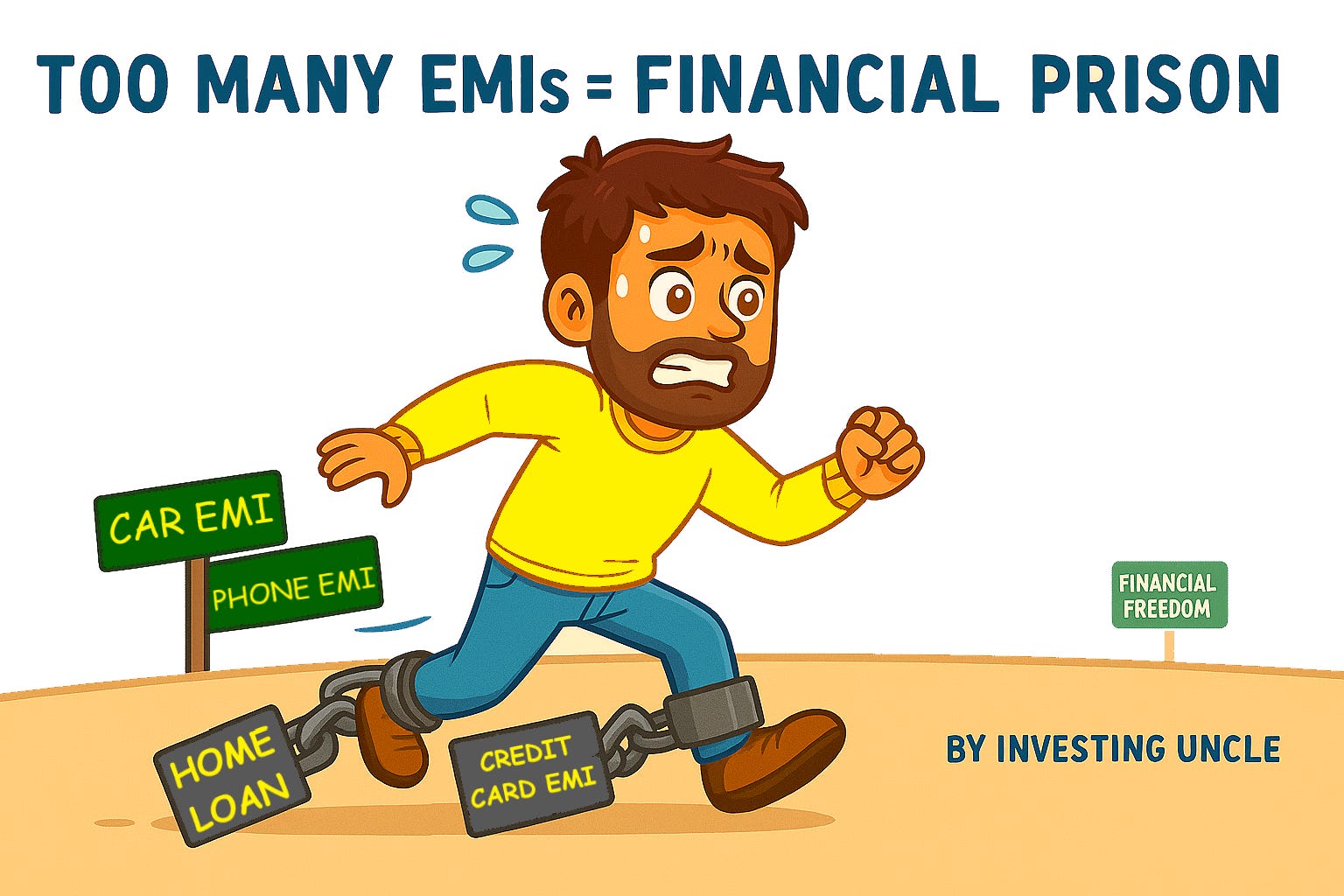
Why Most People Fail at Money Management
I explained it to Bunny with examples straight from my experiences:
1. No Financial Education
School never taught us about Investing, only how to find the area of a Triangle.
2. No Budget
’We’ll see’ budgeting is like going on a road trip without a map - you’ll enjoy the drive but end up lost… and broke.
3. Poor Saving Habits
Most people save “whatever is leftover” after spending. But mostly, nothing’s left.
4. Impulse Spending
Buying because it’s “50% off” is still spending 50% more than zero.
5. Credit Card Dependence
Swiping your cards, thinking it’s fun - until your statement looks like a horror movie.
6. No Financial Goals
If you don’t know what you’re saving for, Netflix, Zomato, and Myntra will find a purpose for your money.
7. Lifestyle Inflation
Got a raise? Great. Suddenly, cutting chai turns into Starbucks, and Activa dreams become SUV EMIs.
8. Not Tracking Expenses
If you don’t count it, it doesn’t count - until your account balance proves otherwise.
9. Lack of Discipline
Saying “no” to yourself is harder than saying “no” to free samosa.
10. No Emergency Fund
Life’s surprise parties - medical bills, home repairs, job loss - are not fun without cash reserves.
11. Bad Investments
Following Social Media tips is like taking medicine from a random baba at the bus stand.
12. Emotional Decisions
Greed, fear, and show-off spending - the three horsemen of financial disaster.
13. Ignoring Small Spends
₹150 coffee × 20 days = “Oh, that’s why my savings are dying.”
Bunny takes charge
We made a simple plan:
Save first, spend later
Track every rupee for a month
Set clear goals (not ‘someday’ goals, but dates and amounts)
Sleep on every purchase above ₹2,000
Build an emergency fund before chasing fancy investments
Two months later, Bunny messaged me - “Uncle, I’m not rich yet, but I’m not broke before the 25th of this month. It Feels amazing.”
Remember, fixing money habits is not just about numbers. It’s about peace of mind.
I explained this in Financial Stress & Mental Health: How to Stay Calm and Sane - because a calm mind makes better money decisions.
Dear Reader = Hero
Bunny’s story isn’t about becoming a millionaire overnight.
It’s about becoming the kind of person who sleeps peacefully because their money is working with them, not against them.
You can be that person too.
“Money doesn’t disappear - it just walks away to the places you don’t track.”
Comment below - which of these money mistakes have you made (and fixed)?
I’d love to hear your story.
See you every Sunday at 09:15 AM, My Hero.
Hope this blog adds real value to your long-term investing journey.
If YES, Maybe you treat Uncle with a cup of Tea?
Disclaimer: Mutual fund investments are subject to market risks, read all scheme related documents carefully before investing. The past performance of the mutual funds is not necessarily indicative of future performance of the schemes. Investors are requested to review the prospectus carefully and obtain expert professional advice with regard to specific legal, tax and financial implications of the investment/participation. This blog/Website is for Educational purpose only. Any reference should not be treated as any form of Financial Advice.
Any person referred to in this post is purely coincidental. The characters, names, and situations mentioned are for illustrative and educational purposes only and are not intended to represent any real individual.
‘Investing Uncle’ is NISM Series V-A Certified (Mutual Fund Distributor’s Certification Examination) conducted by National Institute of Securities Markets (NISM).
Investing Uncle is not SEBI/AMFI Registered.