

The Everyday Confusion
“Uncle, I’ve saved some money. Right now, it’s in Fixed Deposits. People say the stock market can give high returns, but I don’t even understand what a ‘stock’ is. Isn’t it just gambling?”
If you’ve had this thought, welcome to the club. Most middle-class Indians feel the same. Our parents taught us savings = FD, gold, or real estate. But the world is changing.
There’s a middle path between Fixed Deposits and the scary stock market. It’s called an Equity Mutual Fund.
Let me explain…
Meet Our Characters
Bunny (the hero): Represents everyday bread winner, nervous about “investments.”
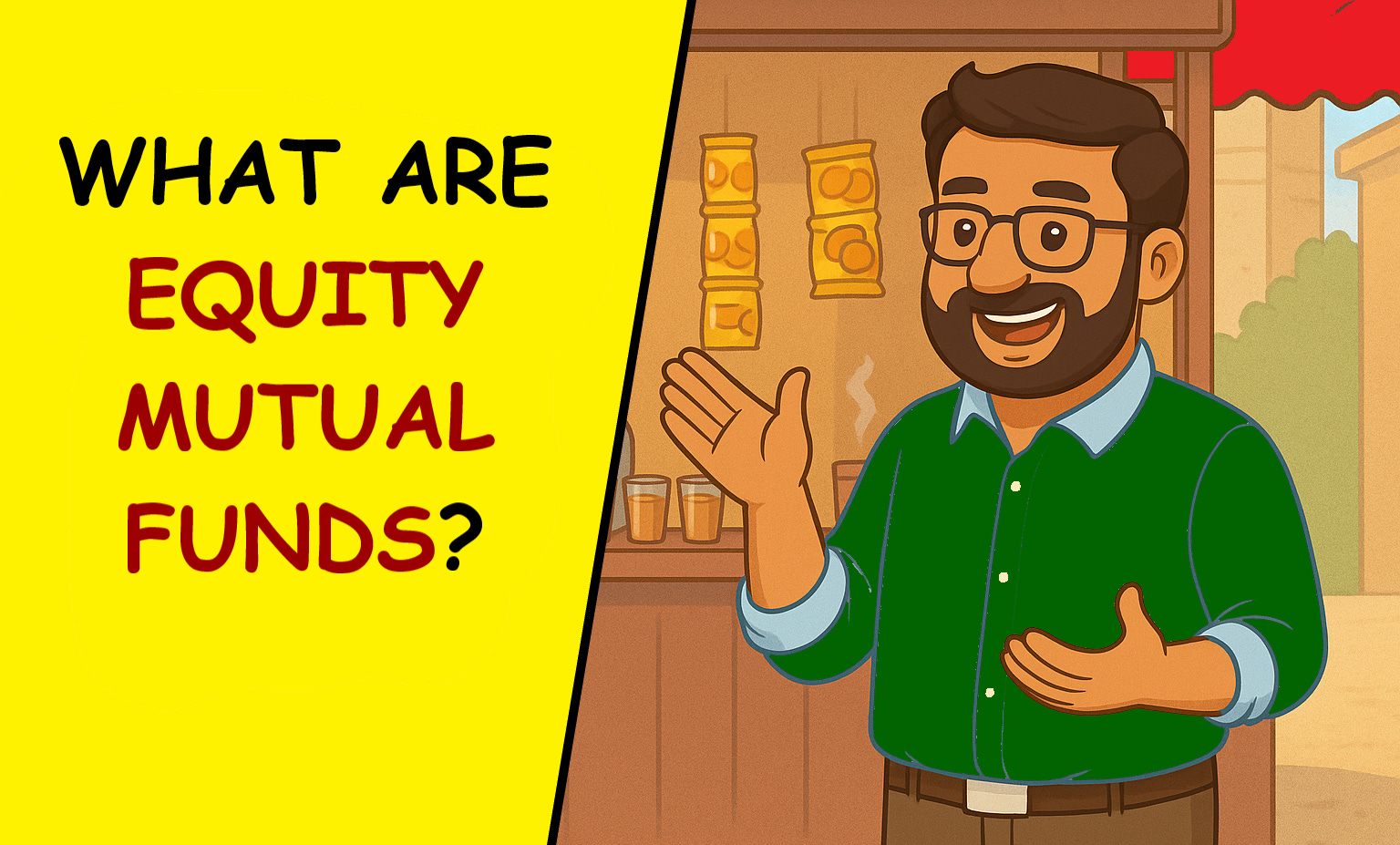
Investing Uncle (the guide): That one relative who mixes jokes with wisdom and explains money as if it’s a bedtime story.
Step 1: What Exactly Is a Stock?
“Uncle, before mutual funds, tell me - what is a stock?” Bunny asked.
I smiled. “Okay. Imagine any company is a big pizza. One stock is a single slice of the ownership of that pizza.
When you buy a stock, you own a small slice of that company. If the company does well, your slice becomes more valuable. If the company struggles, your slice shrinks in value.
That’s why stocks are risky - one company’s success or failure can affect your money.”
Bunny’s eyes widened. “So investing in just one stock (company) is like eating only one slice of pizza. If it’s burnt or tasteless, I am stuck.”
“Exactly!”
Step 2: What Is a Mutual Fund Then?
“Now,” I continued, “imagine instead of buying one slice, you and hundreds of other people pool money together. With that money, a fund manager goes out and buys slices of many pizzas - many companies.
This collection of slices (stocks) is called a mutual fund.
Because you now own small pieces of many companies, the risk of one burnt or tasteless slice is reduced.”
Bunny smiled. “So it’s like a Buffet. Even if I don’t like one dish, I still enjoy the rest of the dishes.”
“Perfect example.”
Step 3: What Makes It an Equity Mutual Fund?
“Mutual funds can invest in many things - debt (government bonds, fixed income), gold, or equity (stocks).
An equity mutual fund specifically invests most of the money in stocks of companies. That’s why it’s called ‘equity.’
Think of it this way:
Debt funds = safe, slow scooter ride.
Equity funds = faster car ride with bumps.
Hybrid funds = scooter + car combined, a mix.”
Step 4: How Does an Equity Mutual Fund Work?
“Here’s the behind-the-scenes process:
You invest money in an equity mutual fund.
Your money is pooled with thousands of other investors.
A fund manager (a professional expert) invests the pool into different company stocks.
If those companies do well, the fund’s value rises. If they do badly, the value falls.
Over the long term, as the economy grows, good companies grow too - and so does your investment.”
Why Not Just Buy Stocks Yourself?
Bunny interrupted. “Uncle, why not buy stocks directly?”
“Good question, Bunny. Here’s why:
Picking the right stock is tough. It’s like picking the winning horse in a race.
You need time, research, and nerves of steel.
Mutual funds save you the headache. A professional manager does the stock-picking.
Plus, you get diversification - instead of betting on one horse, you own a whole race-course!”
What Are the Benefits of Equity Mutual Funds?
Diversification of Risk - One company’s failure won’t wipe out your investment.
Professional Expertise - Fund managers are like chefs cooking with the best recipes. You just eat the meal.
Growth Potential - FDs barely beat inflation. Equity funds aim to grow wealth faster than inflation over a long period of time.
Compounding Power - If you stay invested for 5–10 years, your returns start multiplying on themselves.
Flexibility - You can start with a very small amount and even withdraw your money fast.
But What About Risks?
Bunny looked nervous again. “Uncle, this sounds good… but is it safe?”
I nodded. “Bunny, remember - nothing in investing is 100% safe. Equity mutual funds are market-linked. They go up and down.
Short-term: They are volatile. You may see losses.
Long-term: Historically, equity funds have beaten inflation and given better returns than FDs or debt.
Remember our blog: What RISK Actually Means in Equity Mutual Funds (Not What You Think) but patience reduces the fear.”
Who Should Invest in Equity Mutual Funds?
People with a long-term horizon (5 years or more).
People who want to grow wealth faster than Fixed Return Instruments.
People who don’t have the time or skills to pick stocks themselves.
People willing to face short-term ups and downs for long-term growth.
Bunny Transforms
Bunny leaned back. “Uncle, now I get it. I don’t need to pick individual stock. I can invest in equity mutual funds, let experts handle it, and just stay patient.”
I smiled. “Exactly. Wealth creation is not a 100-meter race. It’s a marathon. And equity mutual funds are your running shoes.”
Our Reader is the Real Hero
If Bunny can understand this, so can you. You don’t need to be a financial wizard. You just need:
Patience
Discipline
Belief in India’s growth
Because when India grows, its companies grow. And when companies grow, your equity mutual funds grow.
“Investing is like growing a mango tree - equity mutual funds give you the seed, but you must give it time to become a fruit-bearing giant.”
Drop your thoughts in the comments below - and don’t forget to Subscribe so you never miss our Sunday 09:15 AM Tea-with-Uncle session.
Hope this blog adds real value to your long-term wealth creation journey.
If YES, maybe you treat Uncle with a cup of Tea?
See you next Sunday!
Disclaimer: Mutual fund investments are subject to market risks, read all scheme related documents carefully before investing. The past performance of the mutual funds is not necessarily indicative of future performance of the schemes. Investors are requested to review the prospectus carefully and obtain expert professional advice with regard to specific legal, tax and financial implications of the investment/participation. This blog/Website is for Educational purpose only. Any reference should not be treated as any form of Financial Advice.
Any person referred to in this post is purely coincidental. The characters, names, and situations mentioned are for illustrative and educational purposes only and are not intended to represent any real individual.
‘Investing Uncle’ is NISM Series V-A Certified (Mutual Fund Distributor’s Certification Examination) conducted by National Institute of Securities Markets (NISM).
Investing Uncle is not SEBI/AMFI Registered.