

“Uncle… I already spent ₹1,00,000 on this Business. And it’s still not profitable after 2 years, I’m thinking of investing more. Otherwise… all that money and Time will be wasted.”
Bunny’s face looked like he’d just bitten into a green chilli thinking it was capsicum - shocked, burning, and instantly regretting his life choices.
I sipped my chai slowly and thought - here we go again. Another victim of the Sunk Cost Fallacy.
Our Hero: Bunny - the confused common man with a heart of gold and a bank account of bronze.
Guide: Investing Uncle - calm, wise, and mildly allergic to wasting money and Time.
The Problem
“Uncle,” Bunny said, “I started a business. I’ve already put ₹1 lakh into it. But, the business is not working… but if I stop now, my money is gone! So I’m thinking… maybe I should put more money to save the earlier Invested money and time?”
I raised my eyebrow so high, it was halfway to the neighbour’s balcony.
I listens and smiles
“Bunny,” I said, “Do you know what you’re doing?”
“What?” he asked.
“You’re digging a deeper hole because you don’t like the hole you’re already in.”
Bunny blinked. “But… if I keep going, maybe it will work?”
Ah. There it was - the classic throwing good money after bad logic.
Plan Given - The Easy to Understand Solution
I leaned forward. “Let me tell you what this is called: The Sunk Cost Fallacy.”
Definition in Uncle’s Word:
It’s when we continue something - a bad movie, a bad investment, a bad relationship - only because we already spent money, time, or effort on it. We feel stopping now would ‘waste’ that past effort.
But here’s the truth, Bunny:
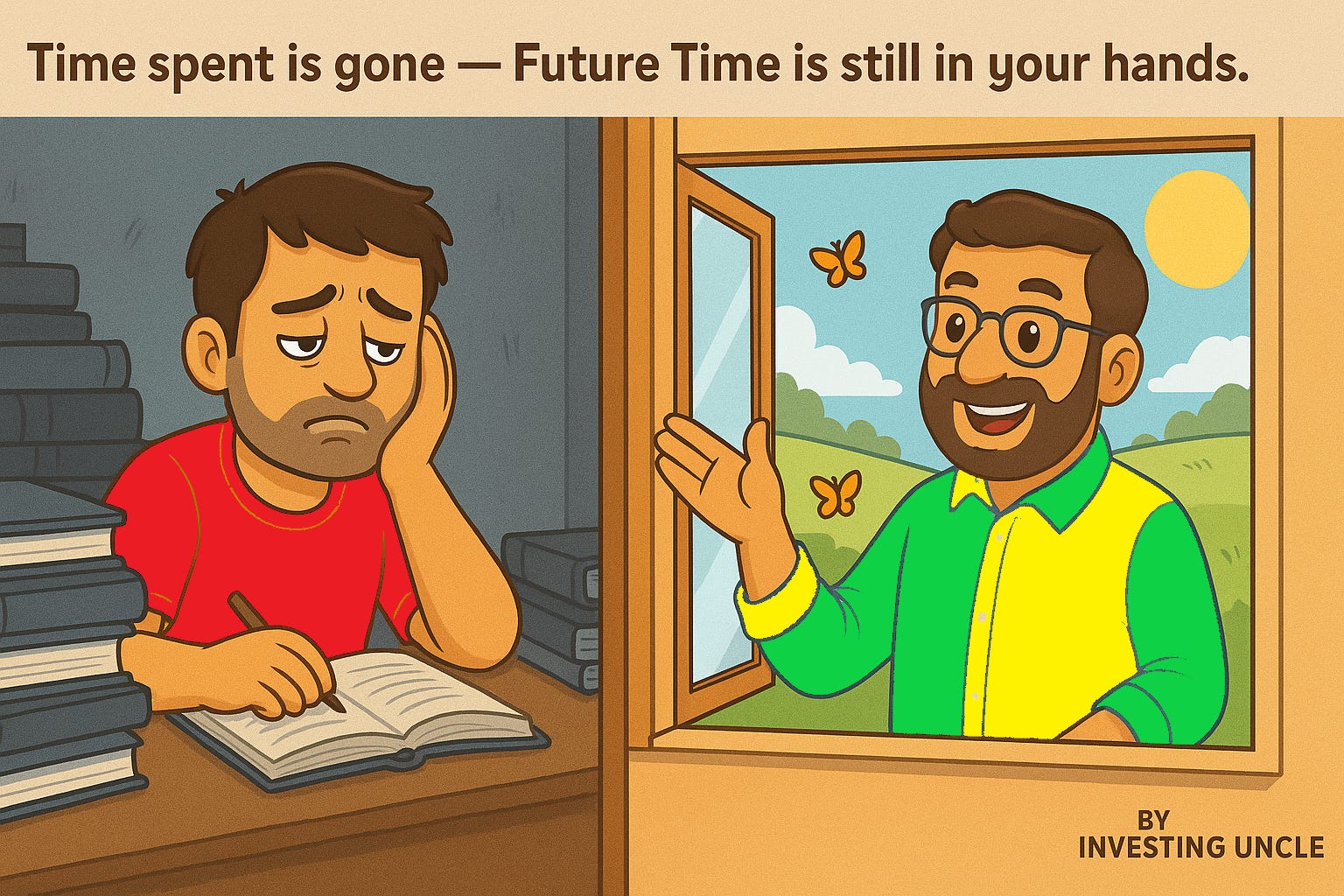
Past costs are “sunk” - they are gone.
Whether you continue or stop, that past money and time will not come back.
The smart decision is based only on future benefits vs future costs.
Why We Fall Into This Trap
I pulled out a paper and started writing:
1. Loss Aversion - We hate losses more than we love gains. Stopping feels like admitting our defeat.
2. Framing Effect - We convince ourselves, “It might still pay off,” even when it’s unlikely.
3. Commitment Bias - The more we’ve invested, the harder it is to quit.
4. Optimism Bias - “Next time, it will work!” we tell ourselves.
5. Personal Responsibility - “I started it… I must finish it.”
6. Cognitive Dissonance - Our brain hates the idea that we made a bad choice, so we keep going ahead, to avoid mental discomfort.
Desi Examples (Because Theory Alone is Boring)
Watching a terrible 3-hour movie because you bought the ticket.
Eating extra biryani even when you’re full because “I paid for it.”
Pouring more money into a failing shop to “recover” old losses.
Staying in a dead-end job because you’ve been there for years.
Continue to study for years the same course after multiple failures, even when knowing, the passing hope is minimum.
Bunny nodded. “So I’m basically watching a flop movie in 4D… except the fourth Dimension is Debt.”
The Uncle Way to Escape the Trap
I told Bunny, “Here’s your rescue plan:”
1. Ignore the past money. Pretend it’s gone.
2. Focus only on future value. Will more time, money, or effort give you better results?
3. Use the ‘Fresh Start’ test. If you had zero money and time invested in this project today, would you still start it? If not - stop it.
4. Set Exit Rules in advance. Decide before you invest when you’ll quit if it’s not working.
5. Ask an outsider. Someone not emotionally involved will see it more clearly.
The Transformation - Bunny Sees His Future Clearly
Bunny sat back. “So… instead of chasing my old money and time, I can cut my losses and invest my energy into something with real potential?”
“Exactly,” I said. “It’s like goal-based investing” I winked, “remember my blog on Goal-Based Investing vs Emotional Investing? This is another case where emotion whispers in your ear, but you need to listen to logic.”
Bunny smiled for the first time that day. “Feels like I just took a heavy backpack off.”
If Bunny can turn around and make a fresh start without the guilt of “wasted money and time” so can you.
Because wealth isn’t built by always being right - it’s built by knowing when to stop being wrong.
Reader = Hero
Bunny walked away from that failing business deal and put his money into a better investment product. Now, instead of waiting for a miracle, he’s watching actual compounding magic happen.
And you, Dear Reader, have the same super-power.
“The only thing worse than losing money is buying a ticket to watch it happen.”
Next time you catch yourself holding on just because you’ve “already spent so much,” pause, take a SIP of Tea, and ask - “If I were starting fresh today, would I still do this?”
And if you want more Tea-break wisdom without the financial hangover, join my newsletter - where your time and money are never wasted.
C-Ya every Sunday at 09:15 AM.
Hope this blog adds real value to your long-term investing journey.
If YES, Maybe you treat Uncle with a cup of Tea?
Disclaimer: Mutual fund investments are subject to market risks, read all scheme related documents carefully before investing. The past performance of the mutual funds is not necessarily indicative of future performance of the schemes. Investors are requested to review the prospectus carefully and obtain expert professional advice with regard to specific legal, tax and financial implications of the investment/participation. This blog/Website is for Educational purpose only. Any reference should not be treated as any form of Financial Advice.
Any person referred to in this post is purely coincidental. The characters, names, and situations mentioned are for illustrative and educational purposes only and are not intended to represent any real individual.
‘Investing Uncle’ is NISM Series V-A Certified (Mutual Fund Distributor’s Certification Examination) conducted by National Institute of Securities Markets (NISM)
Investing Uncle is not SEBI/AMFI Registered.