

Bunny sat in front of me like a man who had just eaten an entire pizza but still couldn’t decide if he was full.
“Uncle… I just bought a phone worth ₹90,000. EMI for 12 months. Now I can’t sleep.”
I didn’t scold him. I just sipped my chai.
Because I knew - the real reason wasn’t the phone… it was the feeling.
OUR CHARACTERS - HERO & GUIDE
Hero: Bunny - represents every middle-class Indian who wants to do better with money but is constantly hijacked by feelings.
Guide: Investing Uncle - calm, funny, wise, explains money as if telling you how to make perfect chai: simple and no-nonsense.
The Problem
“Uncle, I thought I was being logical. My old phone was fine, but this one had better features. And EMI was zero percent! Now my bank balance looks like a patient on ventilator.”
I smiled. “Bunny, tell me honestly - did you buy it for features… or for feeling?”
Bunny went quiet.
Behavioural economics has been screaming this for years - we react first with feelings: excitement, fear, greed, anxiety.
Logic comes late, usually to clean up the mess.
Uncle gives an easy-to-understand solution
“Bunny, you have to do three things to make money decisions smarter:
1. Pause before spending/investing. Even a 24-hour delay can turn a ‘must-have’ into a ‘maybe later’.
2. Name the emotion. Is it fear? Is it pride? Is it the ‘Mehra ji ka beta has it’ syndrome?
3. Bring in logic early. Write down the pros and cons before you take out your wallet.
“Imagine,” I told him, “if every major money decision in your life had a 24-hour ‘cooling period’. No panic selling. No impulse buying. No loans just because of peer pressure. You’d sleep better, spend less, and invest smarter.”
He started nodding like a politician during budget speech.
We spoke about deeper roots. Early life experiences shape how we treat money. If your parents feared loss, you might play safe too. If your family equated money with status, you might overspend to ‘look’ successful.
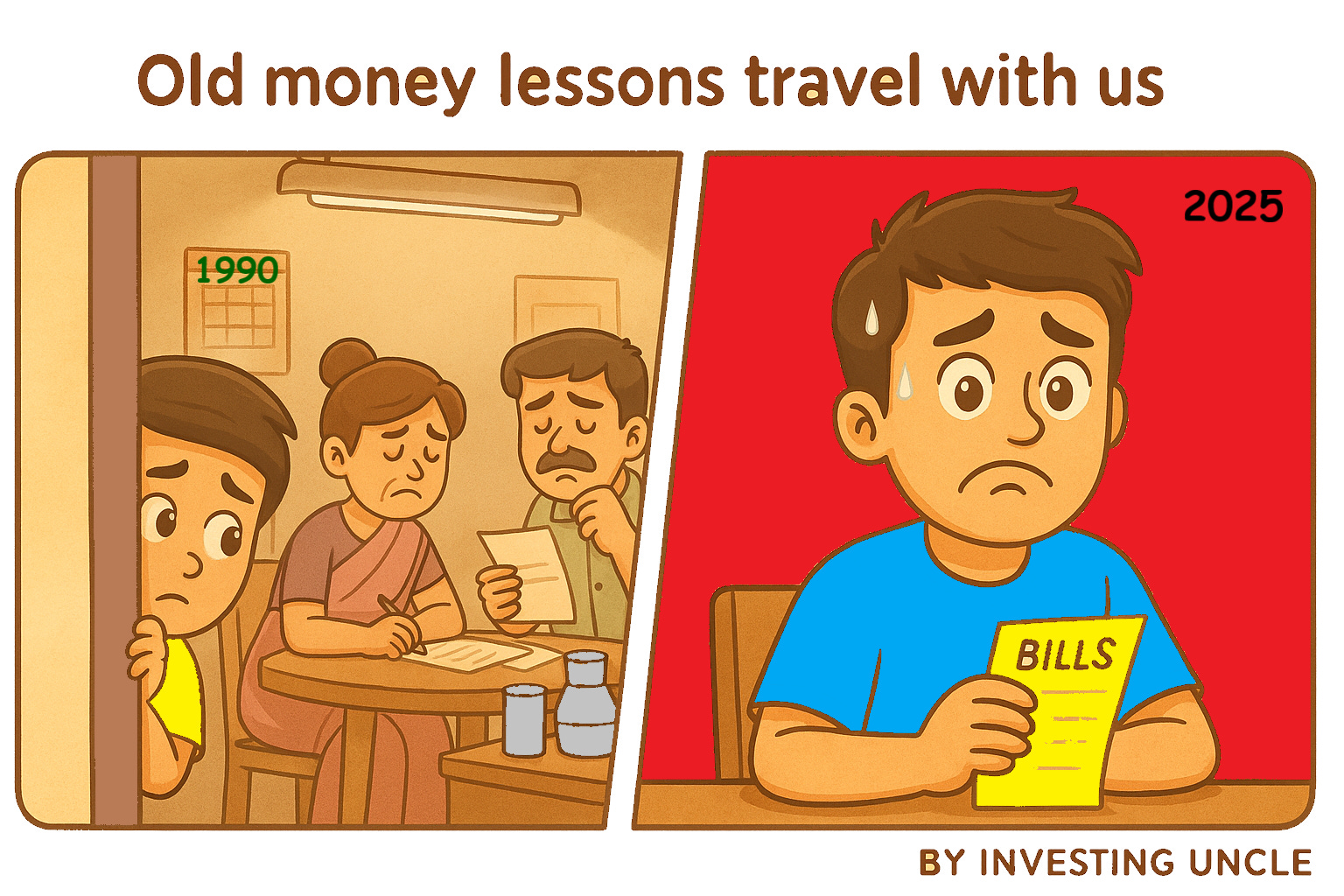
“Bunny, money isn’t just maths - it’s memory, ego, fear, and love all rolled together. Logical thinking comes later. Your job is to invite it in earlier.”
“If Bunny can do it, so can You.”
Bunny left that day promising a “24-hour pause” before his next big spend. If he can break his emotional autopilot, so can you, dear reader.
You’ll notice -
Fear of loss makes us sell in panic.
Desire for gain makes us buy overpriced property or hot stocks.
Marketing doesn’t sell you a product - it sells you a feeling (status, freedom, security).
Logic often comes late, like a guest who arrives after the party is over, only to help clean.
If you missed my blog on Scarcity vs Abundance Mindset: Why Same Salary Feels Different for Different People, read it.
It’s the perfect prequel to today’s topic. It explains why the same ₹50,000 salary can feel like abundance to one person and scarcity to another.
KEY LESSONS
Money is not just a number; it’s a story you tell yourself.
Emotional triggers - excitement, fear, greed - dominate before logic even gets a chance.
Early life money lessons are emotional imprints that can last forever.
The best strategy is not to remove emotion (impossible) but to slow it down so logic can catch up.
Bunny is now practising the “pause + name emotion + bring logic” method. He told me last week, “Uncle, I skipped buying that fancy smartwatch. My old one works fine.”
That’s not just saving money - that’s gaining control.
And if Bunny can do it, so can you because you are the Hero of your journey.
“If money decisions were food, emotions are the spice - just don’t let them cook the whole dish.”
So, what’s the last money decision you made purely on emotion? Tell me in the comments - no judgement here.
See you My Hero, every Sunday at 09:15 AM.
Hope this blog adds real value to your long-term investing journey.
If YES, Maybe you treat Uncle with a cup of Tea?
Disclaimer: Mutual fund investments are subject to market risks, read all scheme related documents carefully before investing. The past performance of the mutual funds is not necessarily indicative of future performance of the schemes. Investors are requested to review the prospectus carefully and obtain expert professional advice with regard to specific legal, tax and financial implications of the investment/participation. This blog/Website is for Educational purpose only. Any reference should not be treated as any form of Financial Advice.
Any person referred to in this post is purely coincidental. The characters, names, and situations mentioned are for illustrative and educational purposes only and are not intended to represent any real individual.
‘Investing Uncle’ is NISM Series V-A Certified (Mutual Fund Distributor’s Certification Examination) conducted by National Institute of Securities Markets (NISM)
Investing Uncle is not SEBI/AMFI Registered.